
Seaside Groundwater Basin
PROPOSED SEASIDE GROUNDWATER BASIN MONITORING WELLS PROJECT
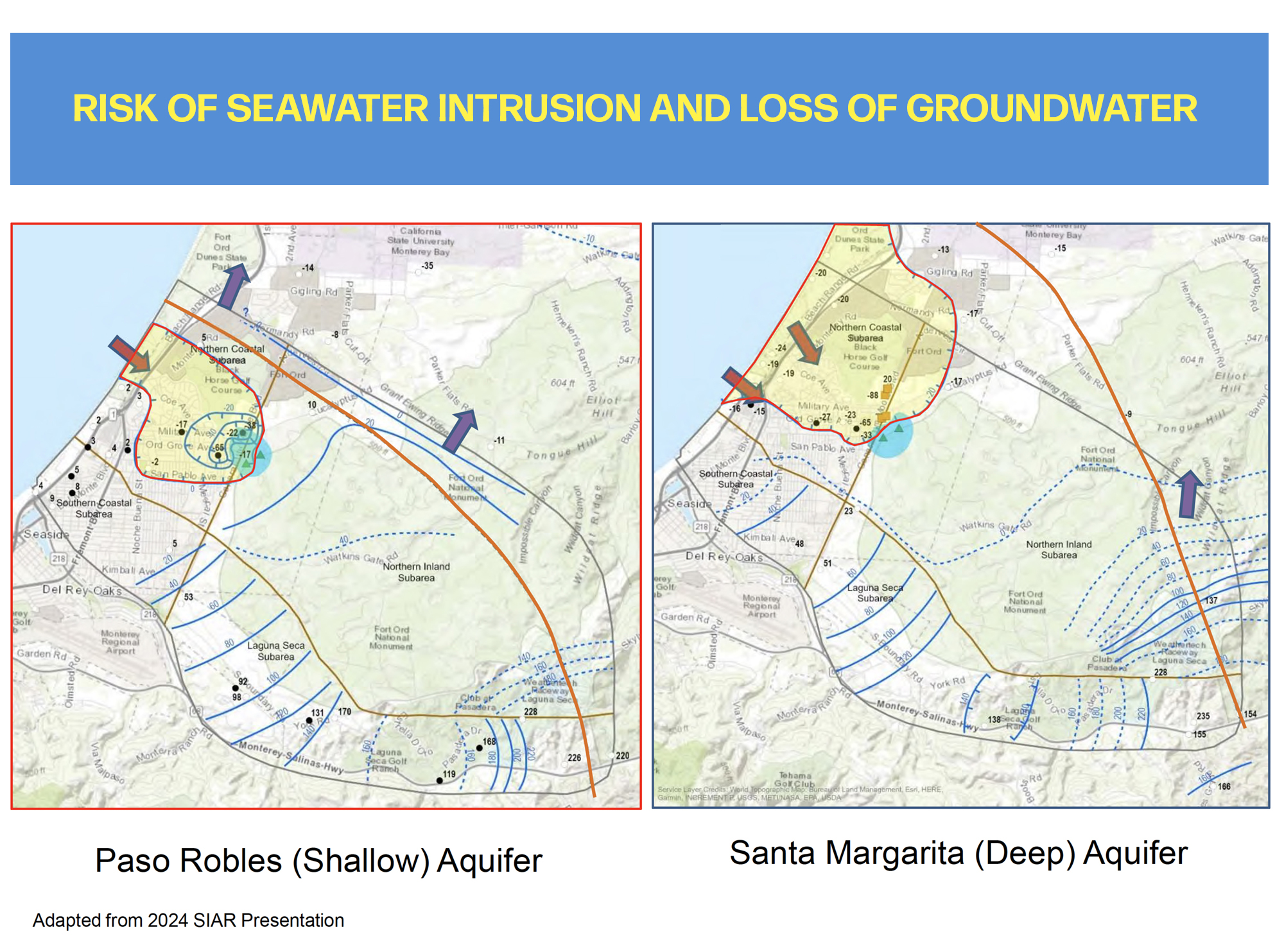
The Seaside Groundwater Basin is the primary source of potable water for the Monterey Peninsula, serving approximately 100,000 residents, 5,100 businesses, and 4.5 million visitors annually. Over-pumping of the basin poses a significant risk of seawater intrusion, which could compromise water quality and reliability. The Monterey Peninsula Water Management District (District), in partnership with the Seaside Watermaster, actively monitors the basin through water-quality sampling and induction logging at sentinel and monitoring wells along the coast.
Recent induction logging at Sentinel well #4 has indicated potential changes in water chemistry, raising concerns about possible seawater intrusion. To confirm whether intrusion is occurring, physical water samples must be collected and analyzed. This project will fund the design, environmental review, drilling, and installation of two new monitoring wells near Sentinel well #4, along with associated water supply reliability features.
The current monitor well network was installed in the mid-1990s and has limited-service life remaining. The wells were installed as 2” PVC nested monitor well clusters, which was the common construction design at the time. Several wells in this network have shown evidence of seal failure due to varying completion depths and have been destroyed. A handful of the wells cannot be sampled for water quality because the groundwater sampling pump that is used in a 2” monitor well cannot lift the water due to the depth to the water table being greater than 350 feet.
The purpose of this proposed program is to evaluate the effectiveness of the remaining wells in the aging monitor well field and to develop a prioritized replacement schedule. The plan is to destroy wells that are no longer effective or are showing aging and are in danger of failure, and replace them with 4” monitoring wells. Four-inch wells are the more common/preferred size for monitor wells because off-the-shelf pumps can be deployed to collect water-quality samples in a repeatable manner. The District would not use clustered monitor well configurations and would use individual monitor wells co-located to target different depth zones to avoid future problems with well seal failure.
The District is seeking to use existing land use agreements and easements to site the replacement monitor wells. This will allow the District to continue to collect groundwater data from the same areas and depth zones of the aquifer system, ensuring the continuity of the existing dataset and the ability to manage and protect the Basin as infrastructure ages.
To supplement efforts to enhance seawater intrusion monitoring, several small monitoring wells along the coast are nearing the end of their useful life. These wells are strategically located between the coast and the major production wells further inland, which is ideal for early detection of seawater intrusion. Redrilling these wells would provide a more precise, robust array of data points to protect the Seaside Groundwater Basin.
Using economies of scale for the refurbishment and construction of new and existing well sites will benefit the region by implementing newer drilling techniques and installing more technology-based sensors and equipment. Simultaneously sampling these wells can help determine whether one area is detecting higher salinity than the others.
Over the last five years, Pure Water Monterey has been operational and has helped provide additional water supplies to the Groundwater Basin. In the region of the aquifer where the advanced-treated, purified water from Pure Water Monterey is injected, the existing monitoring well field is unable to collect water-quality samples due to the depth to the water table. The District is seeking to replace these wells with wells that can be sampled to better track the movement of the project water in the aquifer system. Water chemistry is used to track groundwater movement and mixing, and water quality samples are necessary to complete this analysis.
The project will have a critical role in ensuring long-term water supply reliability for the Monterey Peninsula. By enabling early detection of seawater intrusion, the project enables timely, targeted interventions to help prevent costly, disruptive contamination of the region’s primary potable water source. This proactive approach allows the Water Management District to prioritize the most cost-effective solutions, minimizing unnecessary expenditures and protecting ratepayers from the financial burden of emergency responses or major infrastructure overhauls. The project is especially important for the area’s many low- and moderate-income residents, for whom affordable and reliable water service is essential. Additionally, the project aligns with state and federal priorities for water supply resilience, fiscal responsibility, and environmental protection.
Additional Information regarding the management of the Seaside Basin can be found by visiting the Seaside Watermaster at: seasidebasinwatermaster.org